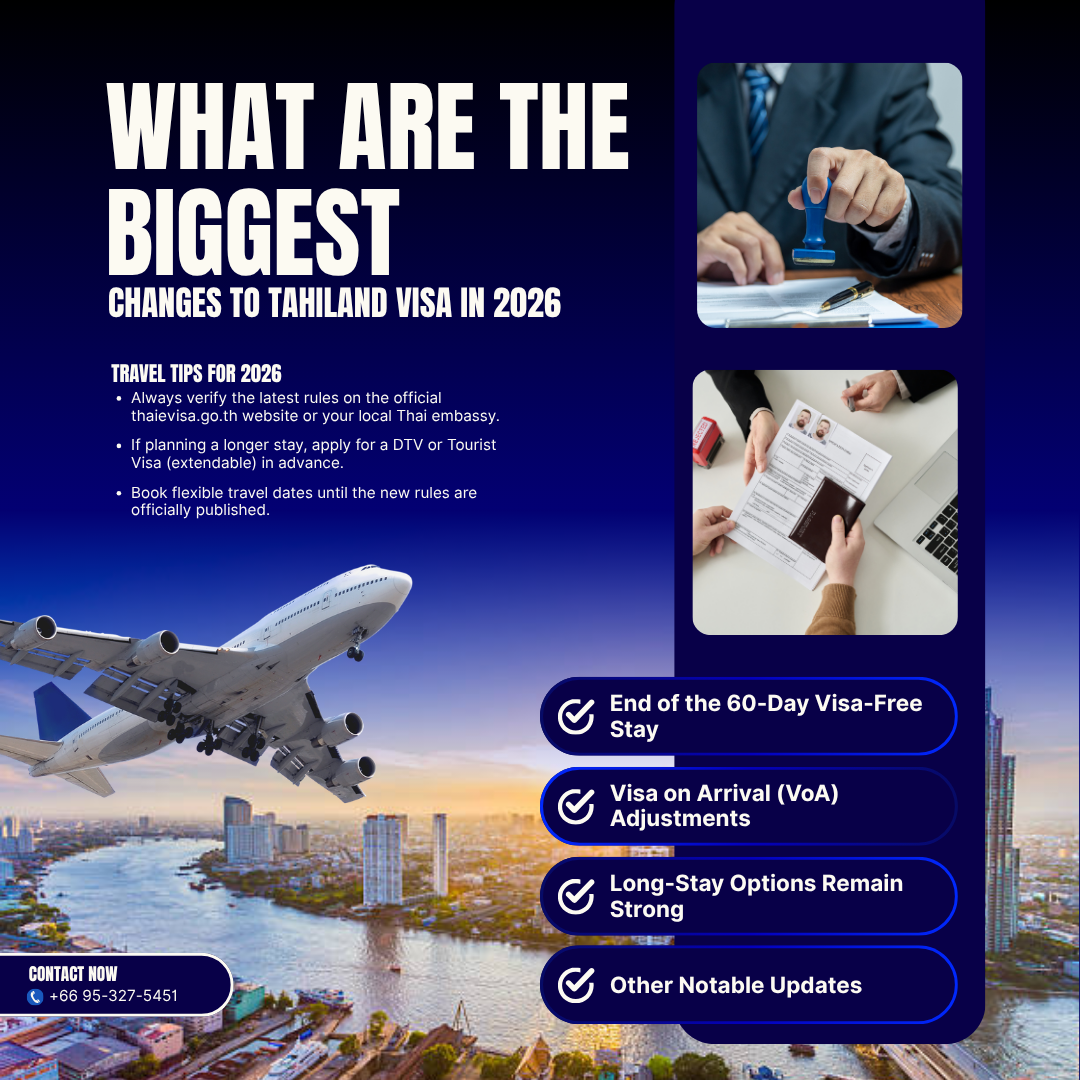
What Are the Biggest Changes to Thailand Visas in 2026?
If you’re thinking about buying property, renting long-term, or moving to Chiang Mai, understanding the latest visa rules is essential. In May 2026, Thailand introduced some of the most significant visa policy adjustments in recent years.
Here’s a clear and practical summary of the biggest changes and what they mean for expats, digital nomads, retirees, and property buyers.

1. End of the 60-Day Visa-Free Entry (The Biggest Change)
This is the most impactful update for most travelers.
- On 19 May 2026, the Thai Cabinet approved the end of the 60-day visa-free scheme that had been available to 93 countries since 2024.
- For most nationalities, the standard visa exemption has been reduced back to 30 days.
- The number of countries eligible for visa exemption was also slightly reduced.
- Visa on Arrival (VoA) was heavily restricted and is now only available to a very small number of countries.
Why did Thailand make this change?
The government cited concerns about overstays, national security, and the desire to encourage visitors to use proper visas through the e-Visa system.
What this means for you:
If you previously relied on entering Thailand visa-free for 60 days, you now have less flexibility. Many people who were doing “visa runs” or staying longer on exemption will need to apply for proper visas (such as Tourist Visa, DTV, or Non-Immigrant visas) if they want to stay longer.
2. LTR Visa Became More Accessible
On the positive side, Thailand made it easier to qualify for the Long Term Resident (LTR) Visa in 2026:
- Removed the previous work experience requirement for remote workers and highly skilled professionals.
- Lowered the employer revenue threshold for some categories.
- Recognized same-sex spouses as dependents.
- Simplified the wealthy global citizen route (more focus on assets).
The LTR visa remains one of the most attractive long-term options, offering up to 10 years of stay with work rights in certain categories and tax benefits.
3. Stricter Scrutiny on Financial Proof
Immigration and embassies have become stricter when checking financial documents, especially for:
- Destination Thailand Visa (DTV)
- Long-stay visas
- Retirement extensions
For the DTV, applicants must now clearly show 500,000 THB in a bank account that has been maintained for at least 3 months. “Snapshot” bank statements are no longer enough in many cases.
4. Continued Push Toward e-Visa and Proper Visas
Thailand continues to expand and improve its e-Visa system (thaievisa.go.th). The goal is to move away from visa runs and short-term exemptions toward more structured, longer-term visa options.
What Do These Changes Mean for People Interested in Chiang Mai?
| Type of Person | Impact of 2026 Changes | Recommended Visa Options |
|---|---|---|
| Digital Nomads | 60-day exemption reduced → less flexibility | DTV (most popular), LTR |
| Retirees (50+) | Visa-free stays shorter → need proper retirement visa | Non-Immigrant O, O-A, or LTR |
| Families | Need more planning for long stays | Non-Immigrant O (family), DTV (dependents), LTR |
| Property Buyers / Investors | Easier LTR pathway is good news for long-term commitment | LTR or Elite |
| Business Owners | Sponsoring staff may require more planning | Non-Immigrant B + Work Permit |


Practical Advice for 2026
- Don’t rely on visa runs as a long-term strategy. The rules are tightening.
- If you plan to stay in Chiang Mai for more than 30–60 days, start looking at proper visas early (especially DTV or LTR).
- Keep strong financial records. Embassies are checking bank statements more carefully.
- The Destination Thailand Visa (DTV) remains one of the most popular and flexible options for remote workers and people doing wellness or cultural activities (such as Muay Thai training).
- Always check the latest requirements on thaievisa.go.th or consult a reliable visa service before making travel or relocation plans.
Final Thoughts
While Thailand has made short-term entry slightly more restrictive in 2026, it has also made some long-term visa options (especially the LTR) more attractive. The overall direction is clear: Thailand wants visitors who are committed to staying longer and contributing properly.
If you’re planning to buy property, rent long-term, or relocate to Chiang Mai, these changes actually make proper visa planning more important than ever.
Would you like help choosing the right visa for your situation?
At Chiang Mai Property Portals, we not only help you find the right home — we also provide guidance on visa options as part of our service to make your move to Chiang Mai smoother.
Feel free to contact us for a free consultation about your visa options alongside your property search.