DTV vs Non-Immigrant O: Which Visa is Better for Retirees in 2026?
If you are over 50 and planning to retire in Thailand, you’ve probably come across two popular options: the Destination Thailand Visa (DTV) and the traditional Non-Immigrant O Visa with retirement extension.
Both can allow you to stay in Thailand long-term, but they were created for different purposes. In 2026, many retirees are asking: Which one is actually better for me?
Here’s a clear and honest comparison to help you decide.
Quick Comparison: DTV vs Non-Immigrant O for Retirees
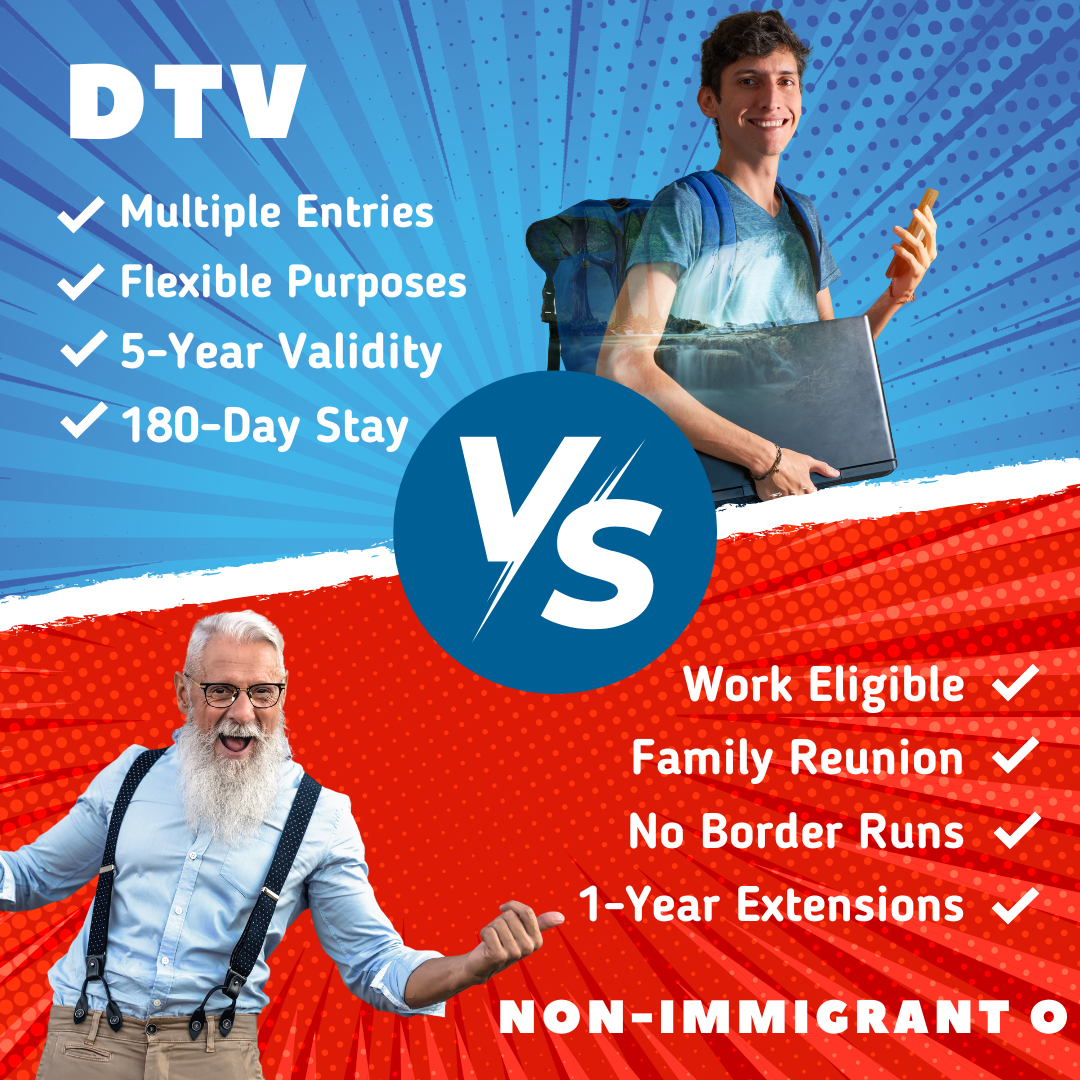
| Criteria | DTV Visa | Non-Immigrant O + Retirement | Winner for Retirees |
|---|---|---|---|
| Designed For | Digital nomads & lifestyle activities | Retirees (50+) | Non-Immigrant O |
| Age Requirement | 20+ | 50+ | Non-Immigrant O |
| Financial Requirement | 500,000 THB (3 months proof) | 800,000 THB or 65,000 THB/month pension | DTV |
| Visa Validity | 5 years | 1 year (renewable) | DTV |
| Stay per Visit | 180 days | Up to 1 year | Non-Immigrant O |
| Work Allowed | Remote work only | No | Tie |
| Health Insurance | Not strictly required | Usually required | Non-Immigrant O |
| Long-term Stability | Medium | High | Non-Immigrant O |
| Ease of Getting | Medium | Medium | Similar |
| Best For | Active retirees who travel often | Traditional long-term retirement | Depends |
Non-Immigrant O Visa + Retirement Extension

This is the traditional retirement visa that most people over 50 use in Thailand.
How it works:
- Apply for a Non-Immigrant O Visa first.
- Once in Thailand, apply for a retirement extension of stay for 1 year at a time.
Requirements:
- Age 50 or older
- Either 800,000 THB in a Thai bank or a monthly pension of at least 65,000 THB
- Health insurance (minimum coverage usually required)
- Medical certificate (sometimes requested)
Advantages for Retirees:
- Specifically made for retirement
- Very stable and well-established
- Easy to renew every year if requirements are met
- Widely accepted by immigration
Disadvantages:
- Higher financial requirement than DTV (800k vs 500k)
- Must maintain the bank balance or pension for renewals
- Only 1-year extensions at a time
Destination Thailand Visa (DTV)

The DTV is a newer visa that some retirees are now using, even though it was not originally designed for retirement.
How it works:
- 5-year multiple entry visa
- Stay up to 180 days per entry
- Can be used under the “soft power” category (wellness, Muay Thai, medical treatment, etc.)
Requirements:
- Age 20+ (no upper age limit)
- 500,000 THB in a bank account (maintained for at least 3 months)
- Proof of purpose (can be wellness activities, medical treatment, or remote income)
Advantages for Retirees:
- Lower financial threshold (500,000 THB)
- Longer visa validity (5 years)
- Easier to enter and exit Thailand frequently
- Good if you like to travel in and out of Thailand
Disadvantages:
- Not officially a retirement visa
- Immigration may question long-term use by retirees
- 180-day stays require leaving and re-entering
- Less predictable for long-term extensions compared to the O visa
- Health insurance is not officially required but highly recommended
Which Visa is Better for Retirees in 2026?

Choose Non-Immigrant O + Retirement if:
- You want a proper, stable retirement visa
- You have a pension of 65,000+ THB per month or can deposit 800,000 THB
- You plan to stay in Thailand most of the year
- You want something reliable and well-recognized by immigration
- You prefer not to leave Thailand every 6 months
Choose DTV if:
- You have difficulty meeting the 800,000 THB requirement
- You like to travel in and out of Thailand frequently
- You are active and want to do wellness, Muay Thai, or medical tourism activities
- You want a 5-year visa with more flexibility
- You have some remote income or savings but not a full pension
My Recommendation for Most Retirees in 2026
For most people over 50 who want to retire in Thailand (especially in Chiang Mai), the Non-Immigrant O Visa with retirement extension is still the safer and more suitable choice.
It was specifically created for retirees and offers better long-term stability. The DTV can work well for some active retirees who travel often and have slightly lower savings, but it carries more uncertainty for pure retirement purposes.
Many retirees use the DTV successfully for the first few years, then switch to the Non-Immigrant O later when they want more stability.

Final Tip
Before deciding, consider:
- Your monthly income or savings
- How often you want to travel outside Thailand
- Whether you want maximum stability or maximum flexibility
If possible, speak with a visa consultant who understands both options before making your decision.